Data is often called the new oil, but unlike oil, its value grows the more we refine and apply it. At the center of this revolution is Data Science—a discipline that combines mathematics, statistics, programming, and domain expertise to extract insights from raw information.
But Data Science is not just a single path. It has many wings—branches that extend into different industries, technologies, and human experiences. Each wing adds depth, power, and application to what we now call the “data-driven world.”
The Core of Data Science
At its heart, Data Science answers three big questions:
What happened? (Descriptive analytics)
Why did it happen? (Diagnostic analytics)
What will happen next? (Predictive analytics)
What should we do? (Prescriptive analytics)
From these core functions, several wings of Data Science spread outward, shaping how businesses, governments, and individuals operate.
The Wings of Data Science
1. Machine Learning & Artificial Intelligence
Perhaps the most well-known wing, machine learning allows systems to learn from data and improve over time. From recommendation engines on Netflix to fraud detection in banking, machine learning is the brain behind modern innovation.
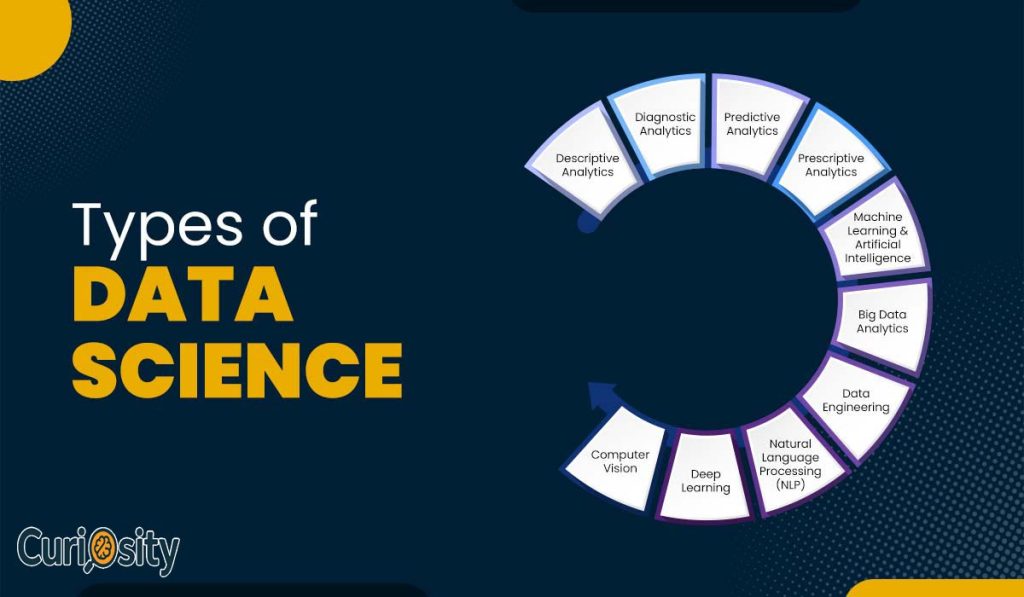
2. Big Data Analytics
With billions of gigabytes generated daily, handling massive datasets has become essential. Big Data Analytics enables companies to process large-scale information and find patterns that traditional tools cannot handle.
3. Business Intelligence (BI)
While Data Science digs deep into advanced algorithms, BI focuses on translating data into visual dashboards, reports, and insights for everyday decision-making. It’s the bridge between executives and data.
4. Data Engineering
Behind every great data project lies a strong foundation. Data engineering focuses on building pipelines, warehouses, and architecture that make analytics possible.
5. Natural Language Processing (NLP)
This wing teaches machines to understand human language. From chatbots to voice assistants and sentiment analysis, NLP brings computers closer to human communication.
6. Computer Vision
By teaching machines to “see,” this wing powers facial recognition, medical imaging, and self-driving cars. It’s where pixels turn into insights.
7. Ethics & Responsible AI
As data grows in power, so does the responsibility to use it wisely. This wing of Data Science ensures fairness, privacy, and ethical practices in data-driven decision-making.
Real-Life Applications Across Industries
Healthcare: Predicting disease outbreaks, personalizing treatments.
Retail: Enhancing customer experience through recommendation engines.
Finance: Fraud detection, credit scoring, algorithmic trading.
HR: Talent analytics, employee retention forecasting.
Public Policy: Smart cities, traffic management, disaster response.
The Future of Data Science
The wings of Data Science continue to expand with AI, IoT (Internet of Things), quantum computing, and automation. Tomorrow’s data science will not just explain the past or predict the future—it will actively shape outcomes by integrating human intelligence with artificial intelligence.
Final Thoughts
Data Science is not a destination—it’s a universe in expansion. Its wings stretch across industries, technologies, and human challenges, making it one of the most powerful fields of the 21st century.
In the end, data science is about more than algorithms—it’s about understanding the world better and making it better.